-
rs5045100
- Posted on
- Categories:Blog
- 0 comments
Stress affects every aspect of our health, including digestion. One of the less obvious but common effects of stress is constipation. The connection between stress and digestive health is significant, and understanding this relationship can help you manage both stress and constipation more effectively. This guide explores how stress contributes to constipation and offers practical tips for managing stress to support healthy digestion.
How Stress Impacts Digestive Health
The digestive system is closely connected to the brain through what’s known as the gut-brain axis. This communication system allows the brain to send signals to the digestive tract, affecting digestion, absorption, and bowel movements. When you’re stressed, your body activates the “fight-or-flight” response, releasing stress hormones like cortisol and adrenaline. This response can impact digestion in several ways:
- Slows Down Digestion: During stress, the body prioritizes essential functions for survival, such as increased heart rate and blood flow to muscles, while slowing down non-essential functions like digestion. As a result, stress can delay bowel movements and lead to constipation.
- Alters Gut Microbiome: Chronic stress can disturb the balance of good and bad bacteria in the gut, leading to digestive problems. A disrupted gut microbiome can impair digestion, leading to constipation and other gastrointestinal issues.
- Increases Muscle Tension: Stress causes muscles to tighten, including those in the digestive tract. This tension can slow down the passage of food and waste, making it difficult to pass stools comfortably.
- Reduces Water Absorption: Under stress, the intestines may absorb more water from stool, which can make stools harder and more difficult to pass.
- Increases Sensitivity to Digestive Discomfort: Stress can make you more sensitive to sensations in the digestive tract, so you may experience discomfort, bloating, or the urge to go without successfully passing a bowel movement.
Signs That Stress Might Be Causing Constipation
If stress is affecting your digestion, you may notice some of the following signs:
- Irregular or infrequent bowel movements
- Hard, dry stools that are difficult to pass
- Feeling bloated or full even after using the bathroom
- Increased abdominal discomfort or pain
- Worsening symptoms of constipation during stressful times
Tips to Manage Stress and Prevent Constipation
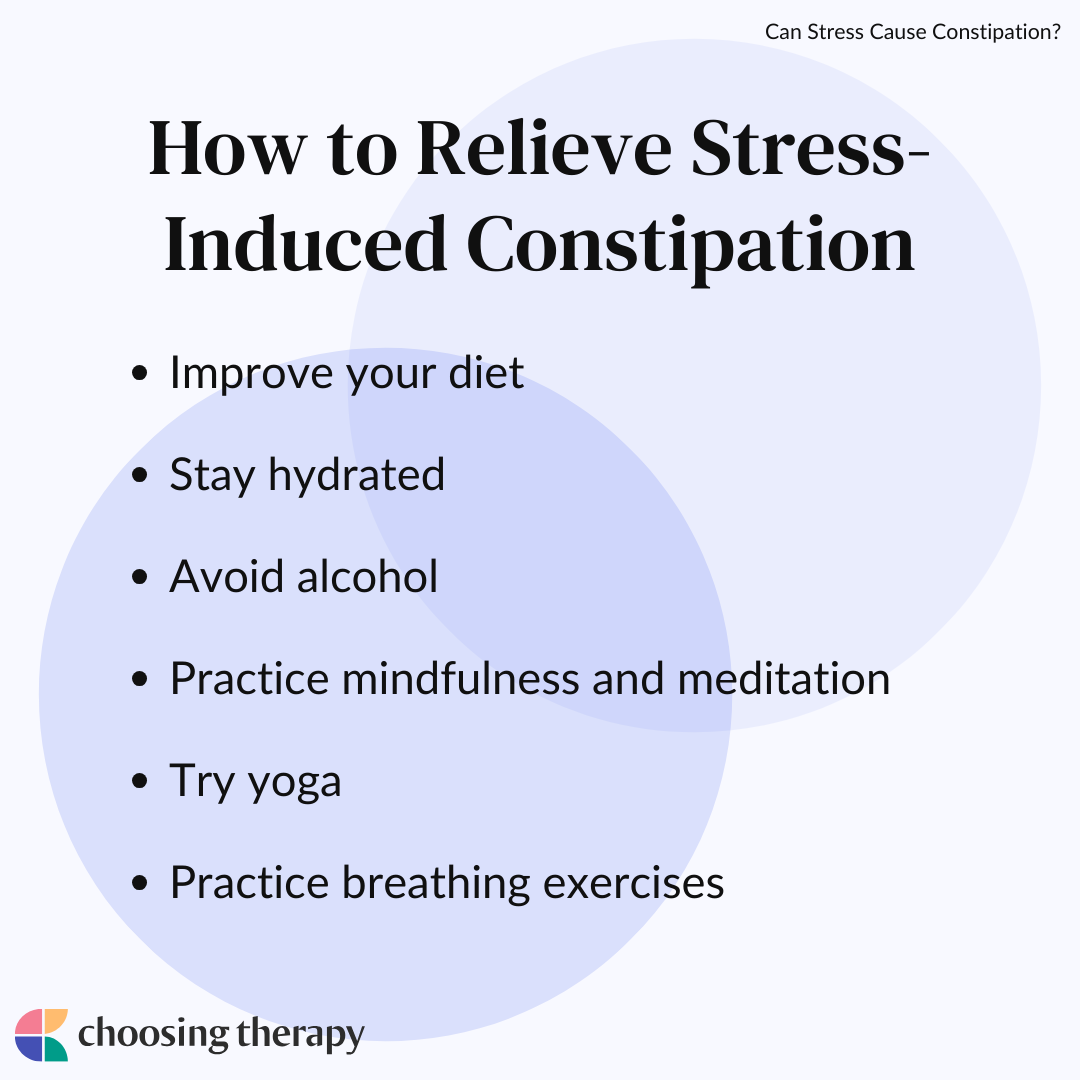
Addressing stress can significantly improve digestive health and help prevent constipation. Here are some effective ways to reduce stress and support healthy digestion:
1. Practice Mindful Breathing
Mindful breathing can help activate the “rest-and-digest” response, which calms the nervous system and supports digestion. Deep breathing reduces muscle tension, slows the heart rate, and helps you relax.
Try this simple breathing exercise:
- Sit comfortably and take a deep breath in through your nose for a count of four.
- Hold your breath for a count of four.
- Exhale slowly through your mouth for a count of six.
- Repeat for 5-10 minutes, focusing on the rhythm of your breath.
2. Incorporate Regular Exercise
Exercise is a powerful way to relieve stress, as it encourages the release of endorphins, which are natural mood boosters. Physical activity also promotes digestive health by stimulating intestinal contractions, which help prevent constipation.
Aim for:
- 30 minutes of moderate exercise most days, such as brisk walking, cycling, or yoga.
- Gentle exercises like stretching and yoga, which can also relieve stress and relax tense muscles in the digestive tract.
3. Prioritize Quality Sleep
Poor sleep can increase stress levels and negatively impact digestion. During sleep, your body repairs and rejuvenates, including the digestive system.
Tips for better sleep:
- Create a consistent sleep schedule by going to bed and waking up at the same time each day.
- Avoid caffeine and heavy meals close to bedtime.
- Establish a relaxing bedtime routine, such as reading or taking a warm bath.
4. Practice Mindfulness and Meditation
Mindfulness practices help you stay present, reduce stress, and regulate mood. Meditation, in particular, is effective for lowering stress levels and promoting a sense of calm, which can positively impact digestion.
Simple mindfulness exercise:
- Find a quiet spot, sit comfortably, and close your eyes.
- Focus on your breathing or a calming image.
- If your mind starts to wander, gently bring your focus back to your breath.
- Practice for 5-10 minutes daily to build resilience to stress.
5. Watch Your Diet
Certain foods can worsen constipation during stress. Processed foods, sugary snacks, and caffeine can all impact digestion negatively. Instead, opt for a fiber-rich diet to support digestive health and avoid constipation.
Diet tips:
- Increase fiber intake with fruits, vegetables, whole grains, and legumes.
- Stay hydrated to prevent hard stools.
- Limit caffeine and alcohol, which can dehydrate the body and worsen constipation.
6. Set Aside Time for Relaxation
Taking breaks and setting aside time to unwind each day can help alleviate stress. Whether through hobbies, reading, or spending time with loved ones, relaxation activities can reduce tension in the body, supporting digestion and relieving constipation.
Try scheduling relaxation breaks throughout the day, such as taking short walks, listening to calming music, or practicing deep breathing.
7. Seek Support if Needed
If chronic stress is impacting your digestion and overall well-being, consider talking to a therapist or counselor. Professional support can help you manage stress effectively and develop strategies to protect both your mental and physical health.
FAQs on Stress and Constipation
1. How quickly can reducing stress improve constipation?
Stress management techniques can yield results within a few days, but consistent practice is essential for long-term improvement. Regular stress relief can support digestive regularity over time.
2. Can stress cause other digestive issues beyond constipation?
Yes, stress can contribute to other issues like acid reflux, bloating, gas, and irritable bowel syndrome (IBS). Chronic stress impacts the entire digestive system, not just the colon.
3. What is the best exercise for stress-related constipation?
Gentle exercises like walking, yoga, and stretching are excellent for relieving both stress and constipation. These exercises promote relaxation and help stimulate digestion.
4. How much water should I drink to help relieve stress-related constipation?
Drinking 8-10 cups of water daily is a good guideline, but needs can vary depending on activity level and climate. Staying well-hydrated is crucial for easing constipation.
5. Can stress-relief supplements help with stress-related constipation?
Supplements like magnesium can support relaxation and digestion, but it’s best to consult with a healthcare provider to ensure they’re appropriate for you.
Conclusion
Stress is a common but often overlooked factor in constipation and other digestive issues. By understanding the link between stress and digestion, you can make targeted lifestyle changes to support both your mental and digestive health. Incorporate stress-reduction practices such as mindful breathing, exercise, and a fiber-rich diet to help prevent constipation. Consistency with these practices can lead to lasting improvements, helping you feel more balanced and comfortable in your daily life.
If stress-related constipation persists, seeking professional support can provide additional guidance on managing stress and improving digestive health.
4o
